This community nature trail was built in May 2024 under the leadership of JJ O’Malley in fulfillment of his Eagle Scout project. He was assisted by scouts from Troop 962. The trail begins and ends at the picnic pavilion and has 10 stations marked by numbered posts. Below is the narrative description of what may be observed at each station on the nature trail.
Station 1 – The playground in Lovettsville Town Center used to be an area of agriculture. Between 1730 and 1750 this area was cleared of trees for farm fields. After more than 250 years of use for farming, beginning in 2006, this area was developed as the Lovettsville Town Center Subdivision. Recently, trees like this maple tree, were planted around the pavilion, tot lot, and playground to provide shade, improve the area’s esthetics, reduce runoff to streams, and help improve air quality.

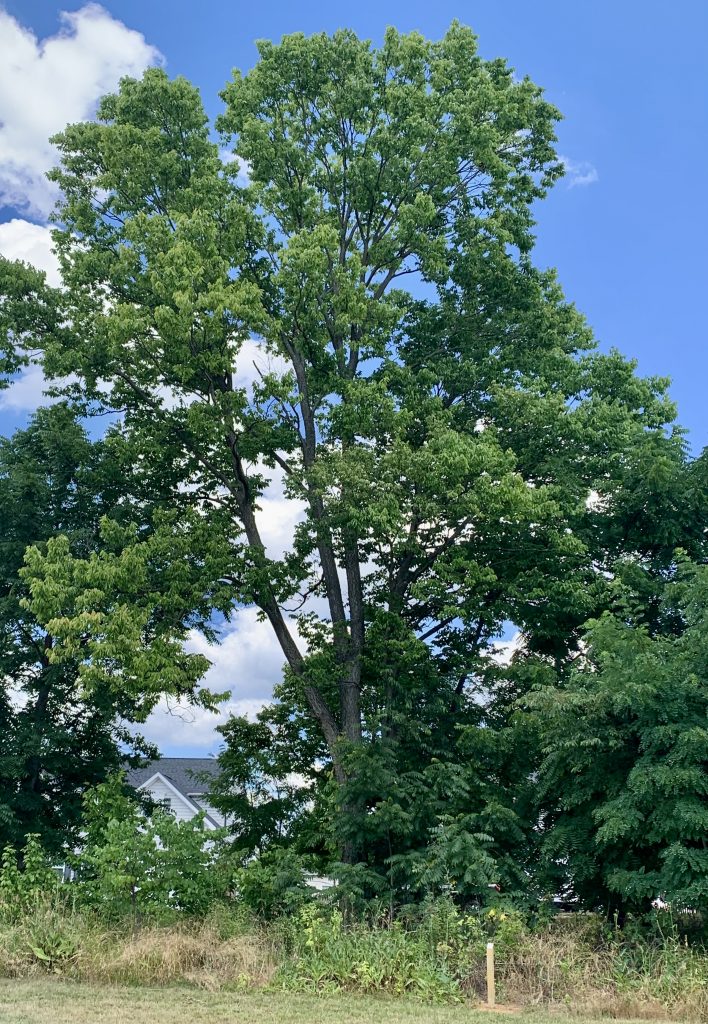
Station 2 – The woods in front of you are what remains of a small, wooded area that once was a fence row that separated two farm fields. The large tree dominating the woods in front of you is a hackberry tree. It produces small fruits (hackberries) that turn orange-red to dark purple in the fall, often staying on the trees for several months. The hackberries, are eaten by a number of birds, including robins and cedar waxwings, and mammals. The tree serves as a butterfly larval host, particularly for the hackberry emperor and tawny emperor butterflies.
Growing here along the edge of the woods are wine berries, an invasive shrub in the same genus as raspberries and blackberries. Wineberry creates thorny, impenetrable thickets that reduce an area’s value for wildlife habitat and recreation. It was introduced to North America in the 1890s as breeding stock for raspberries. It is prized for its delicious edible raspberry-like berries that are produced in abundance in summer. 
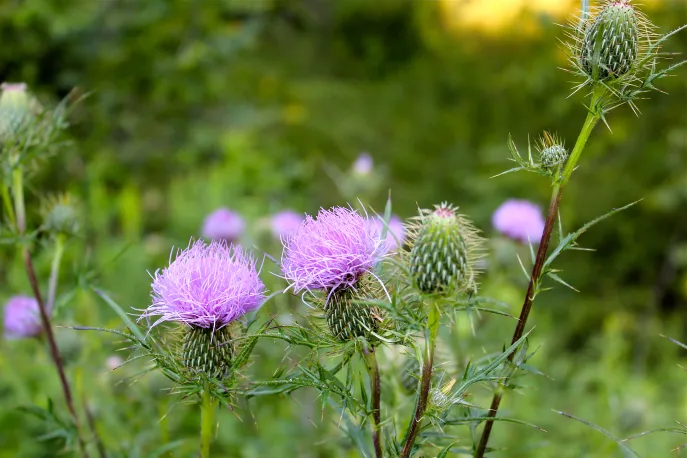
Station 3 – Wildflowers grow in the wild without human help. They often pop up along the grassy margins of the tree line. Birds and the wind spread their seeds. They usually are more resilient to weather changes as they are native species that aren’t dependent on watering by humans. Along the edge of the woods here look for Thistle, a prickly plant with purple flowers.
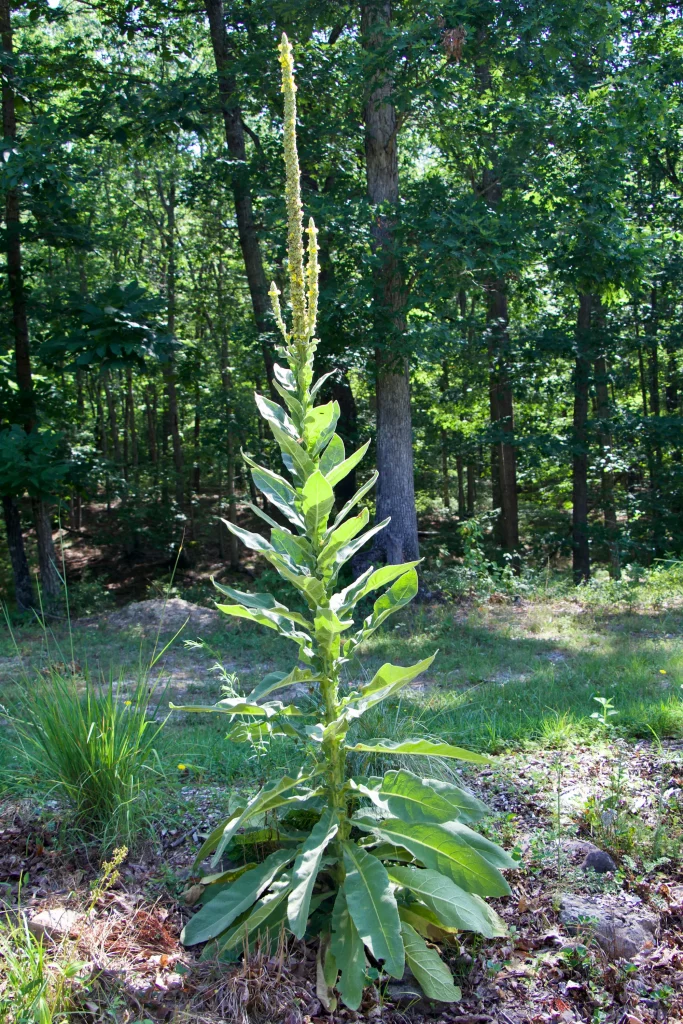
In this area you will also see tall, spikey plants with velvety soft leaves and yellow flowers. This is Common Mullein.
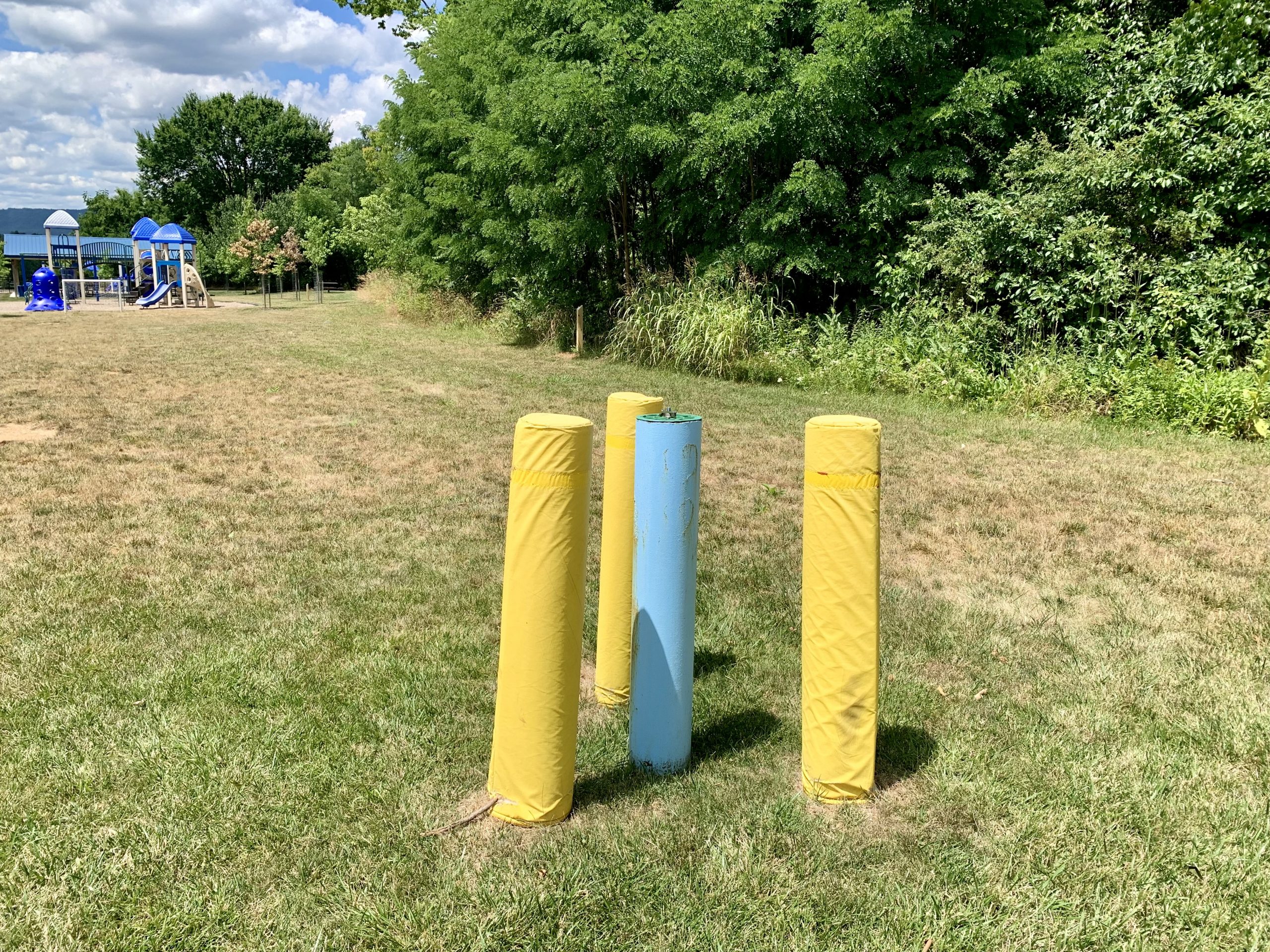
Station 4 – Looking around you can see three yellow pylons sticking out of the ground. The blue metal pipe between the three yellow pylons is a deep well owned by the Town of Lovettsville. It is a reserve well that may be used in the future to produce drinking water for the Town’s needs. To protect groundwater quality, pesticides, herbicides, and other chemicals may not be used within 50 feet of this well. All of Lovettsville’s drinking water comes from deep wells. We are fortunate to have excellent drinking water quality in town.
Station 5 – The trail winding through the woods in front of you was originally formed by children playing. This created the dirt trail that you now walk on with a little help from the scouts who trimmed the branches to make for an easier walking experience.

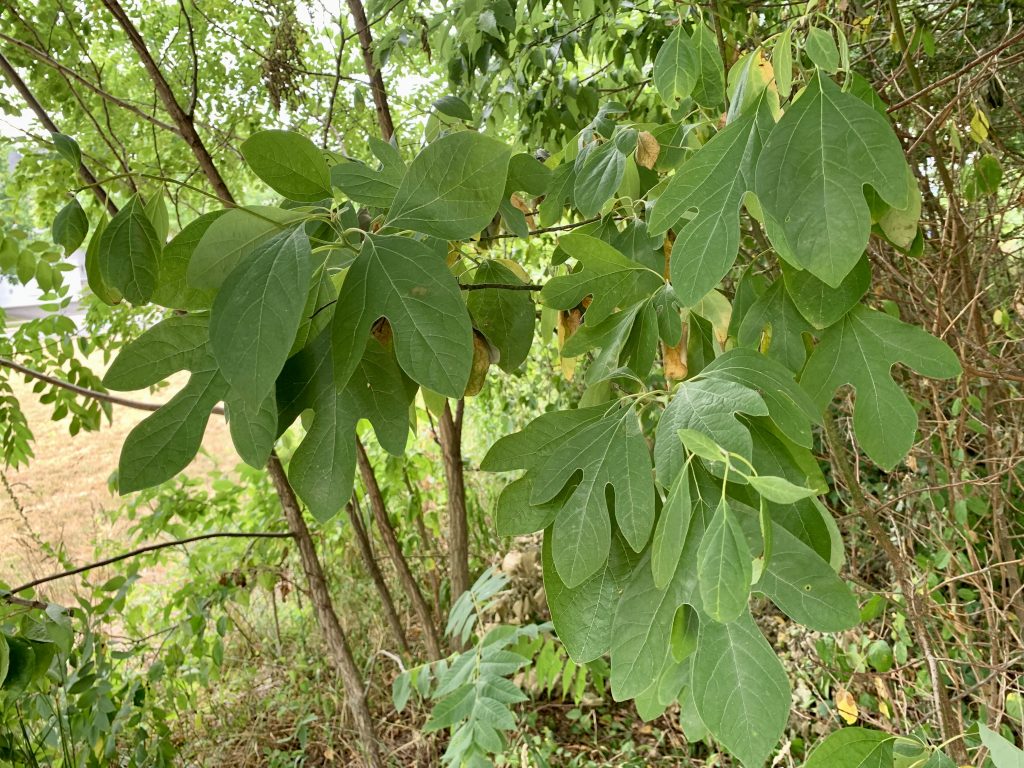
As you enter the woods you will pass through an area with a number of Sassafras trees beginning to grow. Sassafras trees have three shapes of leaves. The three leaf shapes are 1) an unlobed oval, 2) a two-lobed “mitten,” with one large lobe and a smaller “thumb” lobe, and 3) a three-lobed, trident-like form. Sassafras is sometimes used to make a tea similar to root beer.
Station 6 – These woods provide a natural habitat for many beautiful native species of songbirds including cardinals, blue jays, Carolina wrens, black-capped chickadees, goldfinches, robins, mourning doves, and blue birds (pictured below). Also commonly seen are house sparrows, an invasive species that was imported to the U.S. in 1851. They have a very large population in Virginia. Blue birds and house sparrows commonly compete for nesting space. Due to the high population of house sparrows, they often kick blue birds out from their nests and take over the nests. To combat this issue, special blue bird boxes are made to safely house blue birds, giving them more space and lowering the likelihood of a house sparrow taking over.

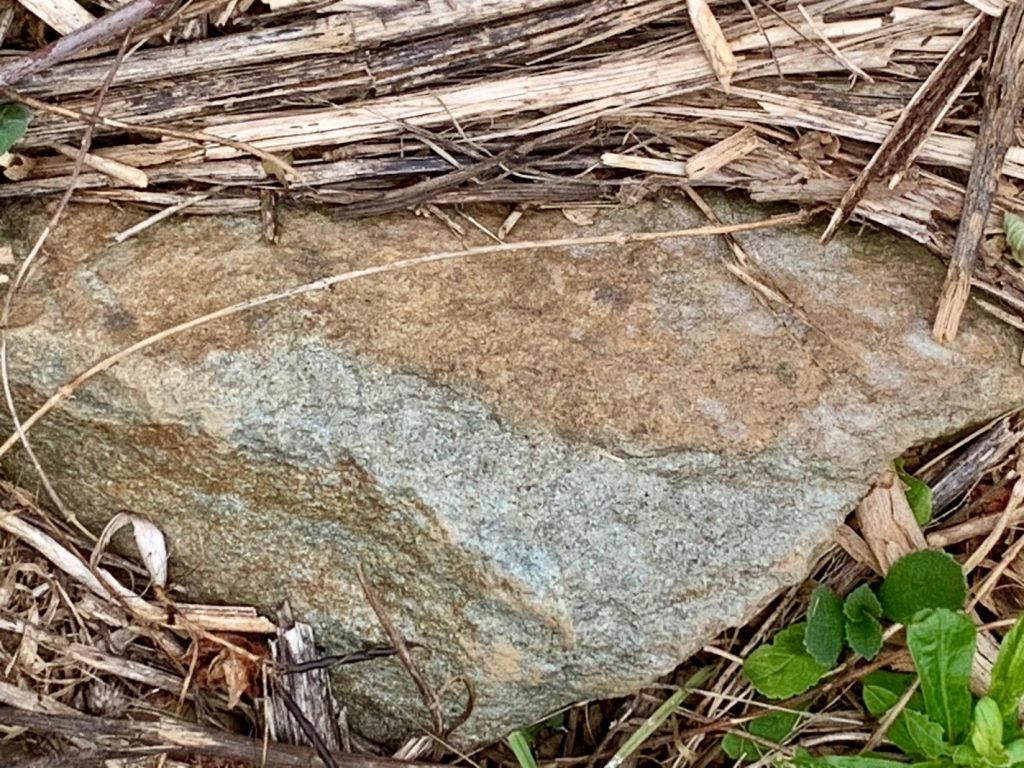
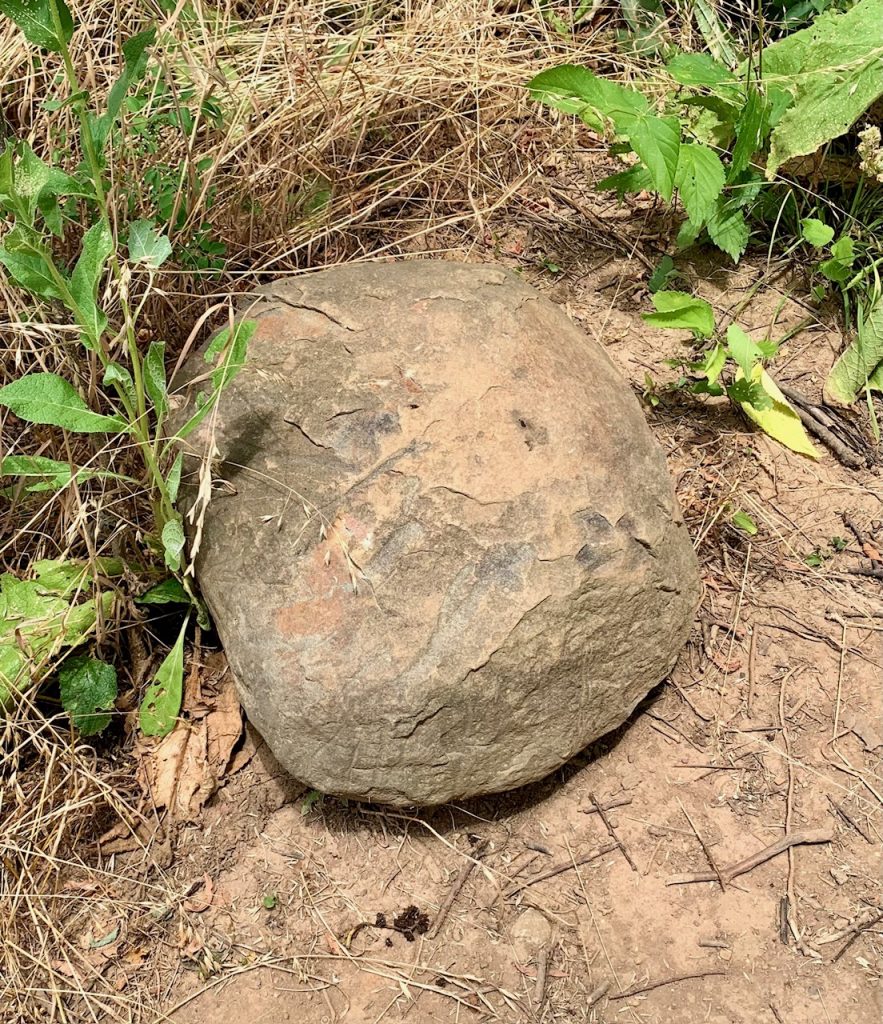
Station 7 – Lovettsville is located in the Piedmont physiographic province of Virginia. The soils below the first few inches of topsoil are commonly clays or clay loams. These soils often extend to a depth of as much as 60 feet before hitting bedrock. The bedrock is composed of metamorphic rocks – for the most part a biotite granite gneiss and garnetiferous metagranite. Where there are surface rocks that can be seen, they are usually fairly smooth and rounded by spheroidal weathering. The outside of these rocks have a darker weathering “rind” due to the breakdown of the rock by soil processes and weathering from rain, snow, and wind once exposed at the surface.
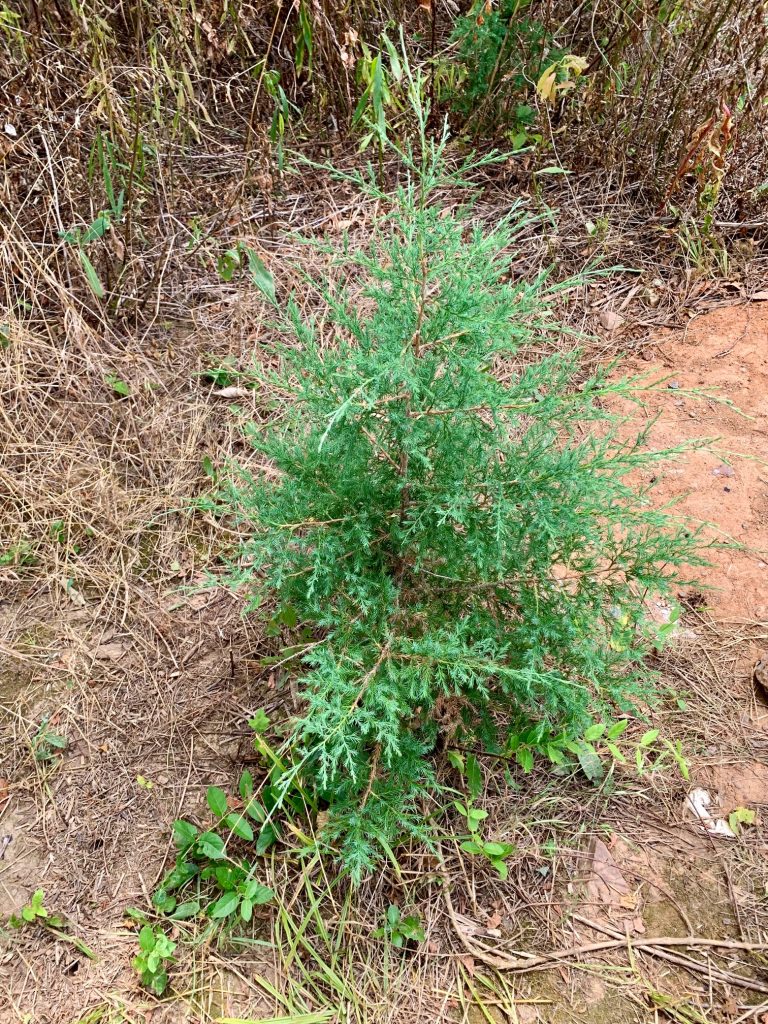
Station 8 – Look around for Eastern Red Cedar. It is a “pioneer species” that often is first to establish itself in abandoned farm fields and along fence lines. It is an evergreen in the juniper family with needles that stay green year-round. Birds spread its seeds (berries). Because its sap resists rot, cedar is often used for fence posts.
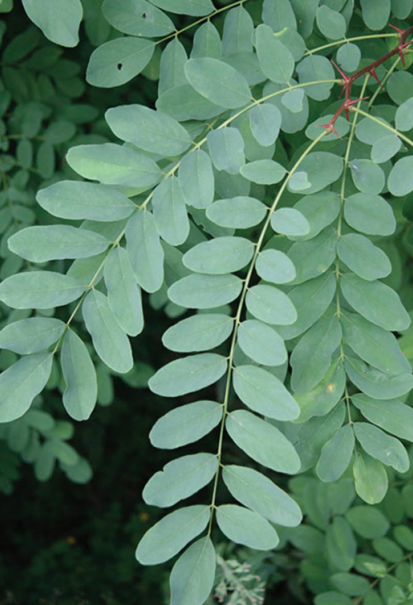
The black locust (over your right shoulder) is another pioneer species that often grows in abandoned fields. Its dense wood is resistant to rot and, like the cedar, it is often used for fence posts. Botanists have suggested that the black locust is one of the few examples of a tree exported by the American Indians from the mountains to the coastal plain for domestic use. By the time the first colonists arrived, they found them planted “by the dwellings of the savages”. Watch out for the thorns on the black locust trees.
Station 9 – Some invasive species in this area were removed by the HOA including Ailanthus (also known as Tree of Heaven). Invasive species like the Ailanthus (pictured below) were brought to Virginia either by accident or they were brought here intentionally to take care of another problem. However, they got out of control and spread. Ailanthus is one of the fastest growing trees in North America, is resistant to drought, and is tolerant of many types of soil. Ailanthus can dominate an area due to vigorous re-sprouting, root-suckering, and secretion of a chemical from its root system to the surrounding soil that is toxic to some other plants.
What categorizes something as an invasive species? It’s a non-native plant or animal that rapidly reproduces and is harmful to the ecosystem in some way. In this case, it harms the ecosystem by sapping nutrients from the ground and crowding out the surrounding native species of trees on which birds and animals depend. Alanthus is the preferred host tree for the invasive Spotted Lanternfly which is devastating our local orchards and vineyards.
Station 10 – When this strip of woods was located along a fence line between farm fields, it was sometimes used as a dumping ground. As the park and playground area was developed by the HOA, a lot of trash was cleaned up including scrap wood, chunks of concrete, broken glass, and even an old car door.

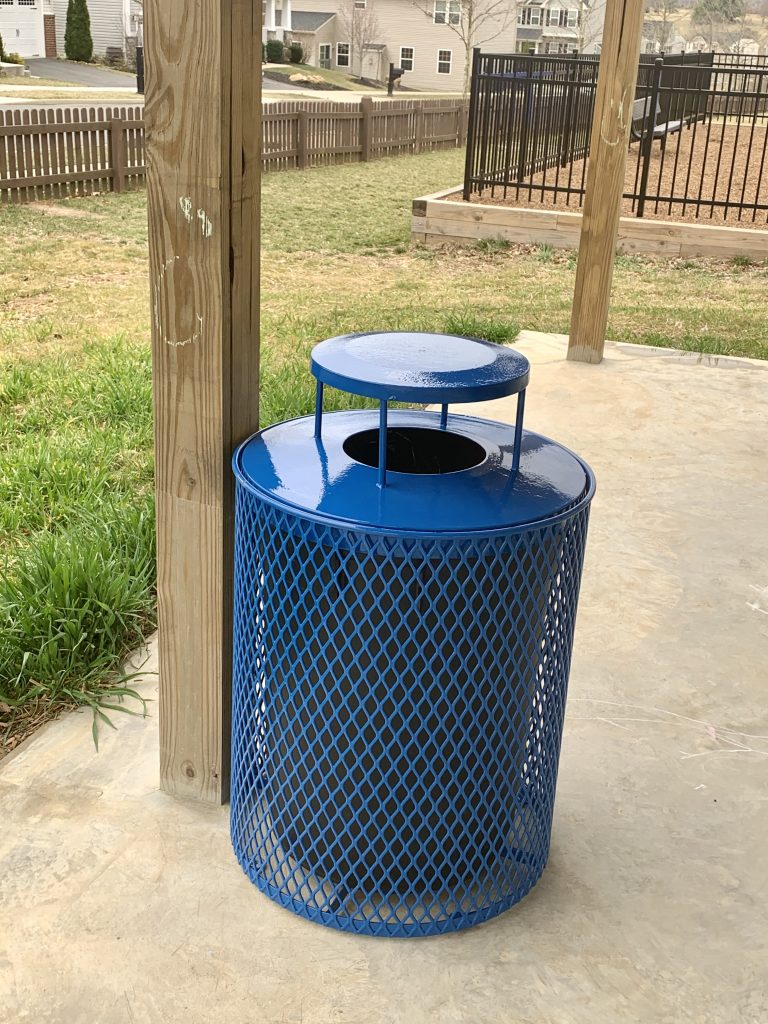
This post is to remind you not to litter. Littering is bad for the environment and hurts local wildlife. What you see as trash, animals may smell as food and eat it or get stuck in it. Let’s keep our environment clean and safe. Please pick up the trash. A trash can is located nearby in the picnic pavilion.